 Yazhini Manimudi
Ever brought home a bottle of perfume, been excited to wear it, and been disappointed when you wore it? It’s a puzzling situation– you know what you tried at the store, bought what you tried, but what you bought is simply not as strong as what you tried…
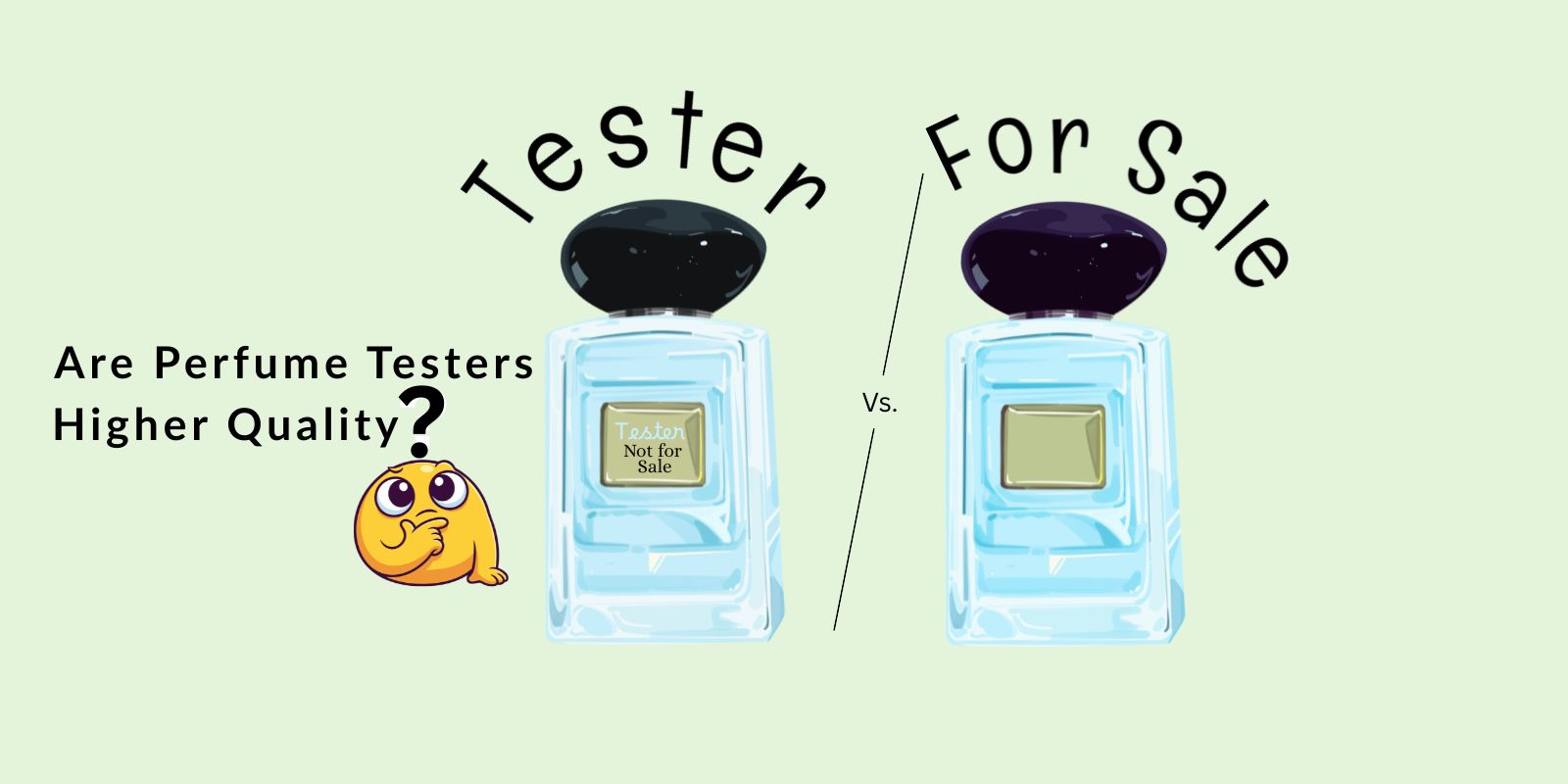
Many have experienced this with their brand new bottles purchased directly from the brand’s own stores or a trusted retailer. It’s easy to jump to conspiracy theories. When the full bottle people paid for doesn’t smell as strong as the tester, people jump to the conclusion that the tester perfumes are a higher quality to trick customers into buying them. The short answer is whether the tester bottles have a better perfume is…no. They don’t. But I understand why people think so…
The perfume industry is veiled by mystery. Concerted effort is taken to hide what goes into the bottle, the word parfum hiding away the array of aromachemicals and natural compounds used. The goal is to protect proprietary formulae, but it has the unintended effect of contributing to conspiracies.
The difference between the perfume in tester bottles and retail bottles can be explained in a few ways:
Perfume Maturation
There’s a reason you’re told to store perfumes in a cool and dark environment with little temperature fluctuations. Perfumes age even though they’re securely sealed in glass bottles. Extended exposure to light, heat, humidity causes changes to the perfume’s chemistry. As you begin to use them, tiny bits of air enters through the atomizer and oxidizes the perfume.
Usually, the top notes (like citruses, light fruits, some aromatic and herbal notes) are composed of lighter molecules. They’re designed to evaporate in about 15-30 minutes to give way to the middle and base notes. Exposed to the unnaturally bright lights of shopping malls over a longer duration of time, the perfume you tried on had time to change and smell a little different from what it was originally.
Inadequate Perfume Maceration
Maceration is the process in which the freshly blended fragrance oils and alcohol (or any other medium) are allowed to sit so they can harmonize into a unified scent. Maceration takes a long time and sometimes it may not be affordable for new or smaller perfume brands to let their product sit for too long. It involves paying for storage space and staff. Time is money and the longer the perfume sits in the maceration stage, the more time it takes to reach shelves and bring in money.
In such a case, it would help you to use a few sprays of the perfume and allow it to sit before beginning to use it regularly.
Formulation Changes
Manufacturers aim for consistency in their products. But there are some inevitable situations that call for a change in formulation. Changes in regulations in different countries might impact the ingredients that can be used. An ingredient that was once permissible may no longer be so. A change in supplier for a certain ingredient might mean a minute difference in the smell. If you’re lucky, that minute difference wasn’t what you enjoyed most about the perfume.
Some perfumes go through a complete reformulation to suit the sensibilities of a modern market. The name and even the bottle might remain the same. It’s possible for there to be a discrepancy between the tester the store has out and the bottles they sell. Perhaps they have a huge stock of the older formulation but ran out of older testers and had to put out the new formulation.
Want to know more about the world of perfumes? Keep reading on Perfume Mag.


 Yazhini Manimudi


 Sowmya Gibish


