 Yazhini Manimudi
It’s 2025 and Merriam-Webster have chosen slop as the word of the year as a representation of all the fast-generated, meaningless slop that has permeated all aspects of life from the digital to the tangible. Every beauty of life is being outsourced to a machine that will never understand it, with each industry producing an op-ed on how AI is shaping their industry. This includes the perfume industry.
In the face of the outsourcing of joys to a machine so humans have more time to produce, it is refreshing and thrilling to see a niche, luxury perfume brand like Memo stand their ground and platform the creatives who add to the artistry of perfume making– their perfumers, illustrators, authors, and photographers.
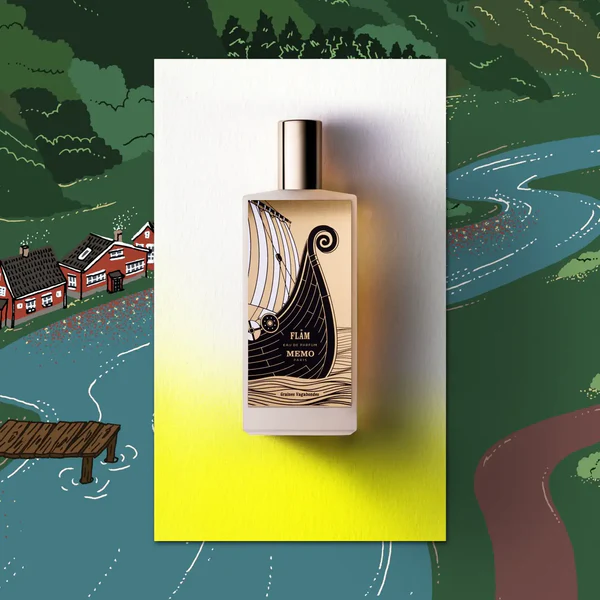
memo Paris Flåm, inspired by the quaint norDIC fishing port

It all makes sense when you learn that Memo Paris founder Clara Molloy is an author herself, the value she places on the written word evident in the colorful descriptions of the brand’s perfumes even before they openly tell you of it. As an author, it is easy to recognize the importance of other forms of art, what they can bring to the table to add to yours. Especially when the art you’re selling can’t be perceived as easily as art that satisfies your eyes or ears.
Niche perfume houses like Memo do have steep prices. But the artistry evident in their creations convinces you of the price whether or not you would personally splurge on one 75 ml bottle when you could have three decent ones for the same price.
Luxury and Artistry

Debates about what luxury is and what should be crop up often in art. Especially perfumery where little is transparent, some brands even concealing the notes that you can expect to perceive in their fragrances. It’s easy in such an environment for ever increasing prices and nothing but a designer brand name to justify it. Dupes flourish. The real effort and value put into each composition disappears behind plain rectangular bottles that claim minimalism as their philosophy to mask the cost-cutting motivations of the drab, uninspiring bottles.
Luxury should give you something to justify the price. It’s a belief that luxury goods are luxurious because they are the highest quality product available. The best of everything. In the pursuit of higher profit margins and unsustainable growth, products in every industry have been dropping in quality while getting more expensive. Everything is manufactured faster and with the intent to last a shorter time just so you need to replace it earlier. Planned obsolescence.
Cutting corners becomes normal practice in the unending pursuit of profit and a certain point, the luxury offering is luxurious no more. The most recent example I can think of is the Maison Margiela Tabis and a disappointed customer who purchased a pair that sounded suspiciously hollow. The uniquely shaped high fashion boots once used stacked leather heels– layers of leather stacked together and nailed to the core of the boot for a high quality, long lasting, and more stable wear. Leather doesn’t sound hollow, so what has changed? Maison Margiela now use plastic heels rather than the high quality stacked leather. Pieces people buy to last a lifetime and beyond are now just plastic slop. Maison Margiela’s artistic beginnings don’t matter to parent company Only The Brave’s greed for more.
The use of AI is part of everything becoming slop. While I am a believer that the price of a product shouldn’t be bloated by anything except the quality of the product itself, I can’t close my eyes to everything surrounding the product. Especially with perfumes whose character you can’t tell without getting your hands on them. The packaging, the font, the texture, the shape, the marketing, the color palette– everything matters when you claim luxury and ask for AED 1,230 for 75 ml of perfume.
We shouldn’t have to pay for anything more than what’s strictly necessary. But as humans, we seek beauty and luxury. Luxury, to me, offers something beyond what is strictly functional for a premium.
Memo Paris seem to align with this concept of luxury.
Travel
Travel is at the heart of Memo’s perfumes, an expression of founder Clara Molly’s husband John Molloy’s love of travel. They see perfumes as travel notes, each wear of the fragrance meant to bring back memories of a unique destination and the precious ingredients that can represent it. Their choice of destinations is more unique than other collections that base fragrances around cities around the world. Marfa, Madurai, Odéon, Lalibela, Zante, Ithaca– all Memo’s scents representing those destinations.
Beyond showing a love of travel, represents the luxury of being well-travelled. The wealth it takes to be a globetrotter even in the era of cheap flight tickets and the wealth of knowledge you can only get from travel. A large part of the appeal of luxury is having something no one else can after all.
A Way with Words
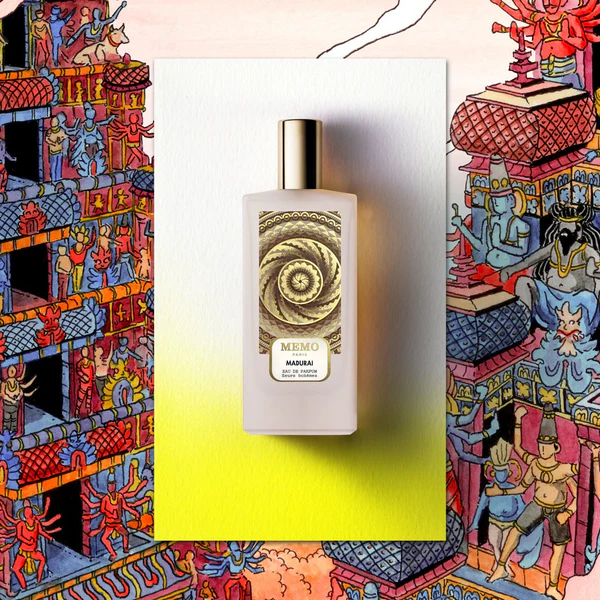

Reading what Memo have to say about each of their perfumes takes you on the journeys they say is central to their philosophy, giving hope that it is about more than marketing. They weave together seamlessly stories of perfume notes and the place that inspired the scent. A more effective way of conveying the experience of scent than a list of notes.
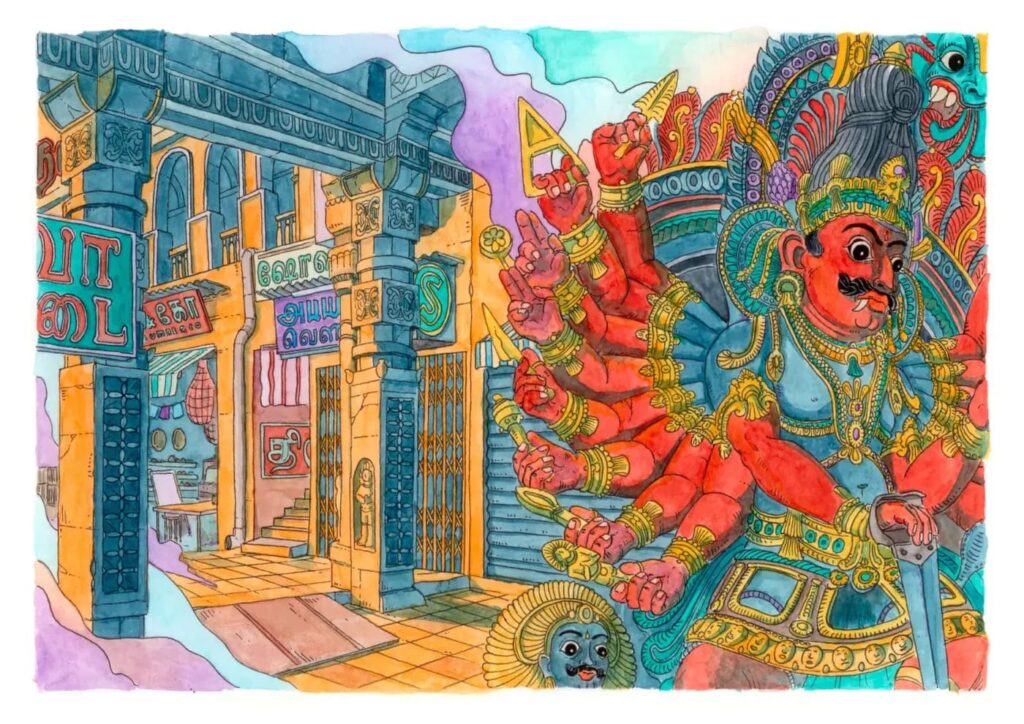
The perfumer’s input describing their inspiration adds value to it, like Gaël Montero’s inspiration for Madurai:
“All my senses were alert. In the warm air, the intoxicating perfume of the flower sellers; the power of the spices and the sweetness of the mangoes from the stalls…. The rich and airy jasmine sambac of the offering necklaces and the creamy scent of sandalwood around the temples.”
Gaël Montero
It paints a colorful picture of the place, hints at the experience the perfume promises to give. Makes scent easier to imagine than a comprehensive list of notes can ever hope to.
Art
Every bottle is a work of art. If you know me, you know I can rant for years about how minimalism has been pushed to conceal the cost-cutting benefits of rectangular glass bottles. I love a uniquely shaped bottle (the hard to maneuver Good Girl and the 100 year old Shalimar) and detest boring ones. I would love a resurgence of the René Lalique era of each bottle being a work of art in itself, worthy even after every drop of perfume if gone.
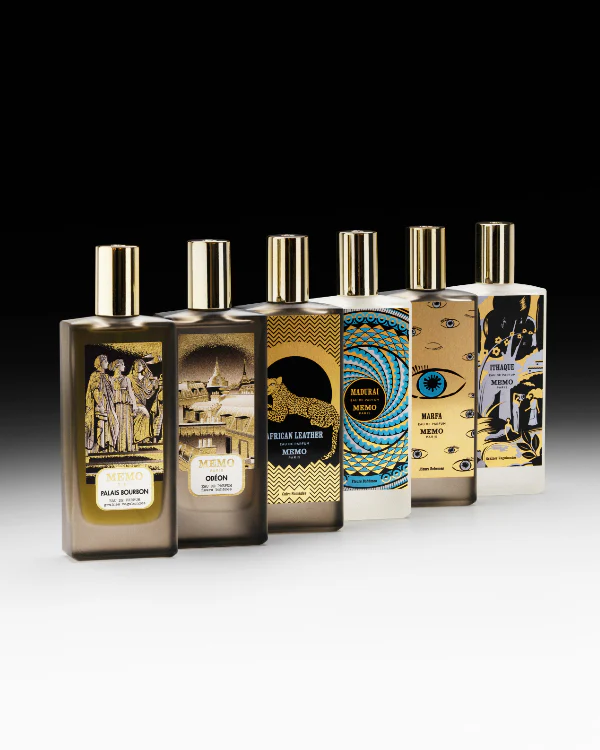
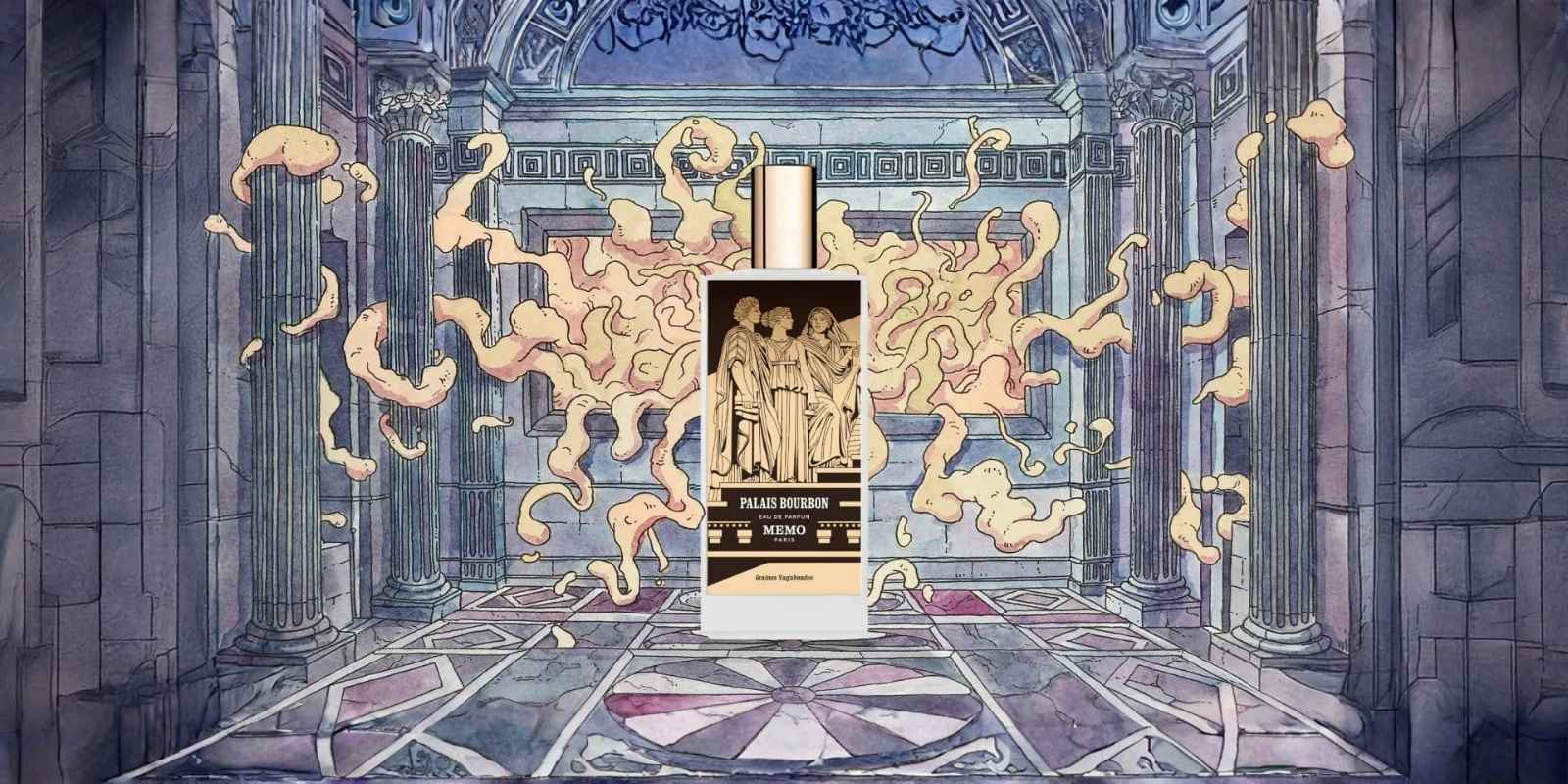
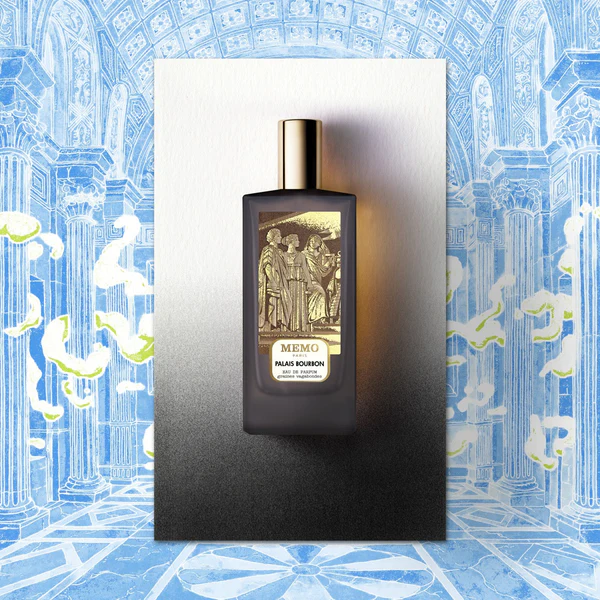
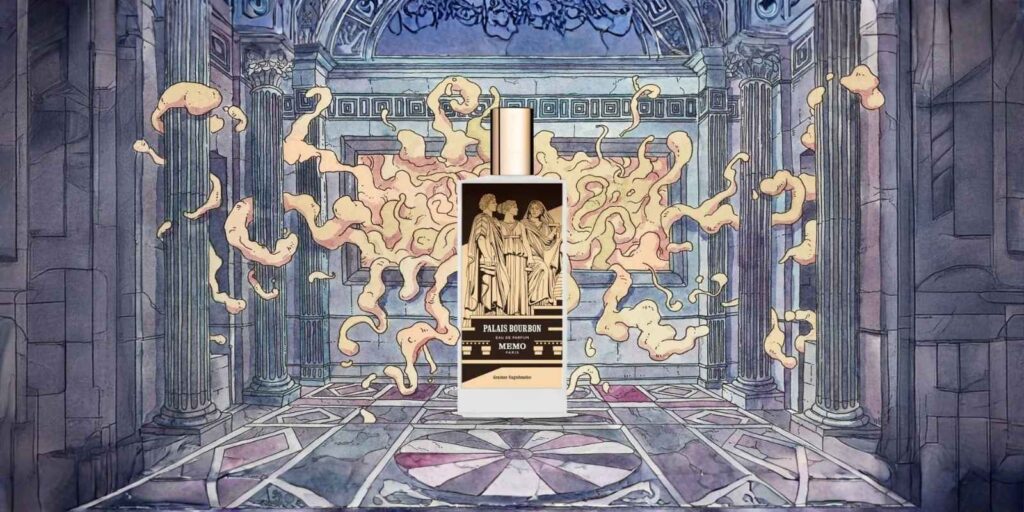
Intrigue, however, isn’t merely in the shape of the bottle. Memo demonstrate this through the art on their rectangles. The art doesn’t stop at the bottles. If you’re buying online, the product page of each perfume is an explosion of colors. You will discover that each perfume has a visual representation. A different artist tapped for their distinct style that is the right fit both for the fragrance and its muse.
Boutiques
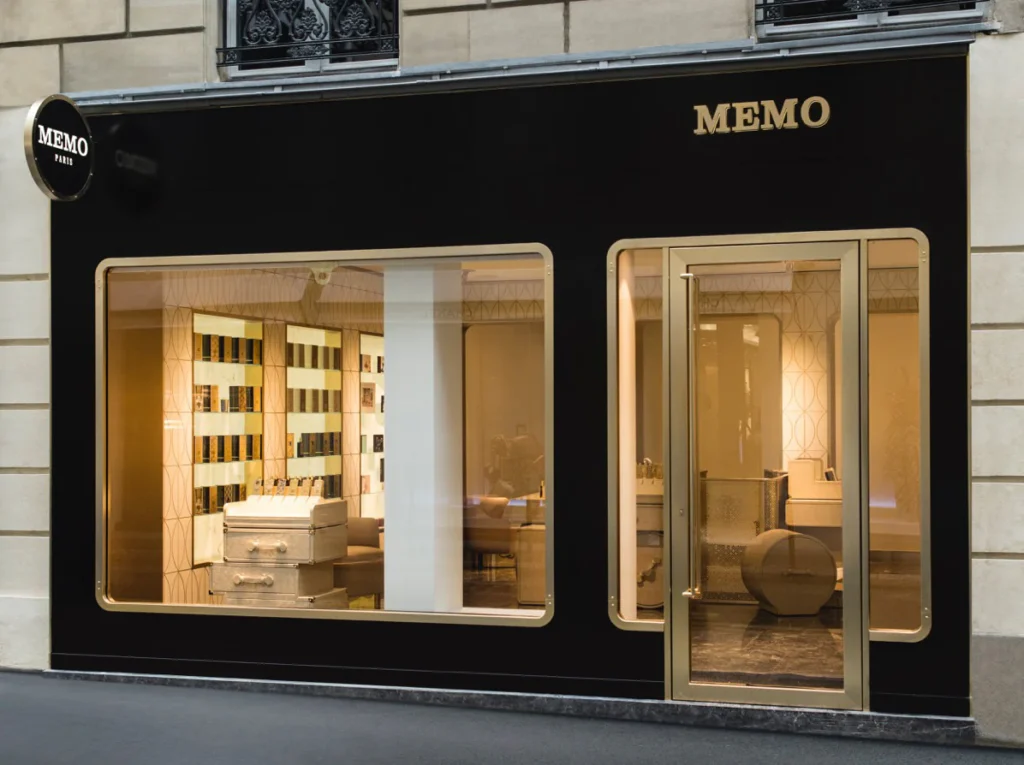
Their boutiques all over the world are part of Memo’s artistic vision, incorporating themes of train journeys into the architecture. Their storefronts are modelled after train cars, many stores feeling like a first class stage couch inside and decorated with white leather luggage cases that display the perfumes.
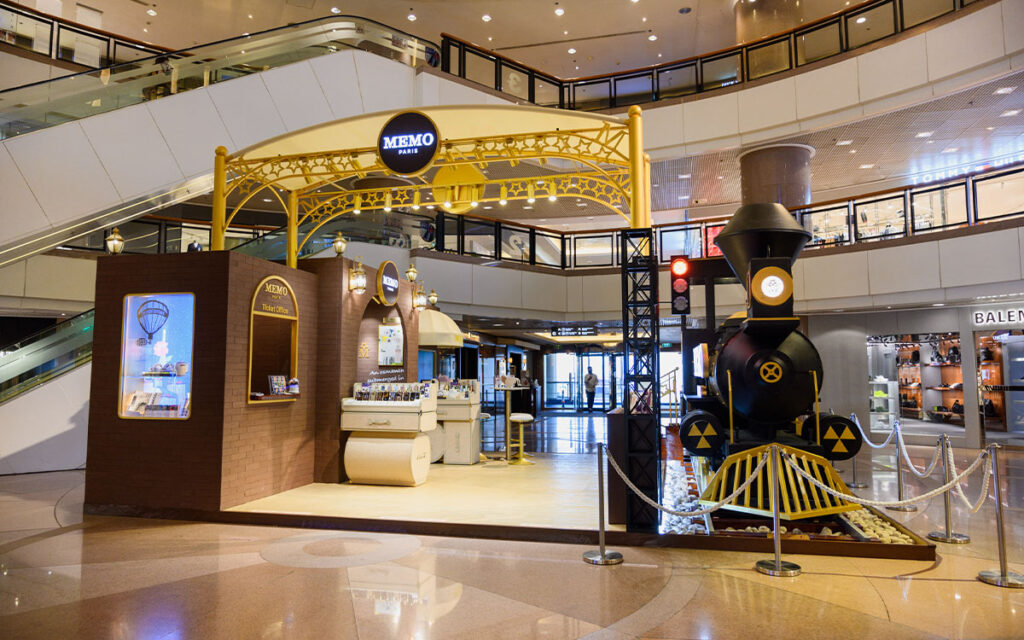
In other stores, they get creative with the theme of a grand hotel, creating the feeling of intricately designed hotel lobbies with a check-in desk and bellboy luggage trolley. They celebrated their 15 year anniversary with a train station shaped pop-up store in Hong Kong. A few following a cruise ship theme recently. I could go on and about the creativity of their stores.
Intentionality
The art, sometimes animated and sometimes not, is not seen beyond the website. It isn’t printed on the bottles, serving only as an aid for online shoppers to imagine the scent before they choose one. It turns even the mundaneness of online shopping to something fun and interesting. Memo telling us that they are a worthy choice.
An unexpected addition is the postcard that arrives with each perfume. Memo take the travel theme further by attaching a high-quality post card, the art on each card unique and representative of the perfume.
Are these elements really necessary? Do they make a perfume smell better? The short answer is no. But, it’s the little things that show intention behind each perfume. When you’re audacious enough to ask for as much as Memo Paris does, you better also give something worth all that. Effort, intention, attention to the smallest details.
When everything is mass-manufactured slop indistinguishable from each other, intentional artistry reminds you that you don’t have to accept the bare minimum for a hefty fee just for the privilege of a designer label. It refuses to accept vapid slop with the reminder that things made by people for other people will always be more enjoyable.


 Yazhini Manimudi


